7.3 The damage that became a memory
L1 Narrative
In 1966 a Bell Labs team with Arthur Ashkin as first author saw that laser beams left lasting changes in the refractive index of LiNbO3 and LiTaO3 [Ashkin et al. 1966 rec]. For frequency doubling this “optical damage” was a defect: the beam distorted itself. Two years later Bell Labs turned it around and wrote holograms into the crystal with light, with no chemical processing [Chen et al. 1968 rec]. RCA Laboratories found that warming the crystal fixes a hologram so reading does not erase it [Amodei & Staebler 1971b rec], and that iron impurities, the cause of the damage, make better recording media when added on purpose [Peterson et al. 1971 rec; Amodei et al. 1972 rec]. By 1993 Northrop stored 5000 holograms in one iron-doped crystal [Mok 1993 rec].
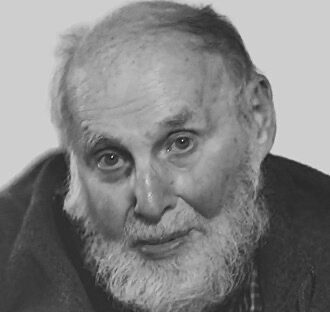
In 2018 Ashkin shared the Nobel Prize in Physics, for optical tweezers, at 96 [Nobel Prize API 2026 rec].
The damage that became a memory: Write, fix, erase

The damage that became a memory
L1
A laser meant to double frequency left lasting index changes in the crystal (1966) [Ashkin et al. 1966 rec]. Bell Labs used them to store holograms (1968) [Chen et al. 1968 rec]. RCA learned to make them permanent (1971) [Amodei & Staebler 1971b rec] and stronger with iron (1972) [Amodei et al. 1972 rec]. Northrop stacked 5000 in one crystal (1993) [Mok 1993 rec]. Meanwhile magnesium, zinc and indium raised its damage resistance, MgO at about 4.6 mol% by at least a hundredfold (1980-1992) [Zheng et al. 2016 P] (7.6). The first author of the 1966 paper won a Nobel Prize in 2018, for a different use of light [Nobel Prize API 2026 rec].
| τ writing (2×10⁴ W/m2) | 0.50 s |
| τ reading (103 W/m2) | 10.00 s |
| Peak contrast / Δnsat | 0.000 |
| Fixed share of the pattern | 0% |
- Crystal
- congruent Fe:LN
- τ writing (2×10⁴ W/m2) / reading (103 W/m2)
- 0.50 s / 10.00 s
- Peak contrast
- 0.000
- Fixed share
- 0%
Move over the plate to write. Brightness: |Δn| on a log scale over three decades; measured order 10−3 Chen 1969. Time constants are display values from the reduced single-center model, not material data; the dark decay takes days in this model. Steps: Chen et al. 1968, Amodei & Staebler 1971b; MgO: 1980 conference abstract, Bryan et al. 1984 (threshold about 4.5 at.%).
L2
Δ n = (1/2) ne3 r33 Esc; Esc up to about 105 V/cm from the bulk photovoltaic effect [Glass et al. 1974 rec]; observed Δ ne up to 10−3 [Chen 1969 rec]. Fixing works because ions drift at 100 C and compensate the electronic grating, which then survives uniform illumination [Amodei & Staebler 1971b rec]. MgO above threshold multiplies photoconductivity by about 100 [Bryan et al. 1984 rec].
L3
All events V except the earliest “photorefractive” title (P, title search) and the age ranking (derived); the Kyiv affiliation of the Kukhtarev papers is P.
L2 Numbers and mechanisms
Mechanism. Chen (1969) measured extraordinary-index decreases up to 10−3 under 20 mW of focused 488 nm light and explained them by photoexcited electrons drifting out of the illuminated region and retrapping at its edge; the resulting space-charge field changes the index through the electro-optic effect [Chen 1969 rec]. Glass, von der Linde and Negran (1974) found that the main driver is a bulk photovoltaic current, with saturation voltages above 1000 V, about 105 V/cm, explained by the asymmetry of the lattice [Glass et al. 1974 rec]. Peterson, Glass and Negran (1971) identified iron impurities as the origin [Peterson et al. 1971 rec].
Order of magnitude (derived): Δ n = (1/2) ne3 r33 Esc. With ne about 2.2 (visible), r33 = 30.8 pm/V (clamped, Turner 1966 as compiled by Weis and Gaylord [Weis & Gaylord 1985 rec]) and Esc = 107 V/m [Glass et al. 1974 rec], Δ n is about 1.6 × 10⁻³, the same order as Chen's 10−3.
Band-transport model. Kukhtarev, Markov, Odulov, Soskin and Vinetskii (Ferroelectrics 22, Crossref issue date 1978-01, usually cited as 1979) wrote the rate and transport equations that most holographic-storage papers cite as “Kukhtarev's equations” [Kukhtarev et al. 1978a rec; Kukhtarev et al. 1978b rec]. In common notation, with donor density ND, ionized donors ND+, electrons n, intensity I, photoexcitation cross-section s, thermal rate β, recombination γR, mobility μ, and photovoltaic constant κ:
- dND+/dt = (s I + β)(ND - ND+) - γR n ND+
- j = e μ n E + μ kB T grad(n) + κ s (ND - ND+) I
- dn/dt = dND+/dt + (1/e) div(j)
- div(ε E) = e (ND+ - NA - n)
The photovoltaic term is Glass's [Glass et al. 1974 rec]. Theory of the photovoltaic (photogalvanic) current in noncentrosymmetric media: Fridkin [Fridkin 1977 rec; Fridkin & Popov 1978 rec; Fridkin 1979 rec] and Belinicher and Sturman [Belinicher & Sturman 1980 rec].
Fixing and doping. Heating about 30 min at 100 C gives optically nonerasable holograms with diffraction efficiency up to 50% via thermally activated ionic drift [Amodei & Staebler 1971b rec]. Transition-metal doping raised storage strength, with diffraction efficiencies “well over 50%” in a few millimeters [Amodei et al. 1972 rec; Amodei et al. 1971a rec].
Capacity. Mok (1993): up to 5000 holograms of 320 x 220 pixel images in one Fe:LiNbO3 crystal, 90 degree geometry, fractal-space multiplexing [Mok 1993 rec].
The name. The earliest paper title found with “photorefractive” is Kurz, Ferroelectrics 8, 437 (1974-01) [Kurz 1974 P]; Glass et al. used it in a title in 1974-08 [Glass et al. 1974 rec].
Damage-resistant dopants (MgO, Zn, In) and stoichiometric growth: 7.6. Consequences for modern devices: chapter 04.
L3 Sources and status
| Claim | Source | Status |
|---|---|---|
| Discovery 1966-07-01, seven Bell Labs authors | Ashkin et al. 1966 (no abstract online) | rec |
| Holographic storage, no processing, thermally erasable | Chen et al. 1968 abstract | rec |
| Drift and retrapping model, Δ ne up to 10−3 | Chen 1969 abstract | rec |
| Bulk photovoltaic driver, > 1000 V | Glass et al. 1974 abstract | rec |
| Iron as origin | Peterson et al. 1971 abstract | rec |
| Fixing at 100 C, 30 min, up to 50% | Amodei & Staebler 1971b abstract | rec |
| Kukhtarev equations; Kyiv | Kukhtarev et al. 1978a/b (Crossref); Kyiv from a secondary citation | rec / P |
| 5000 holograms; Northrop | Mok 1993 Optica page | rec |
| Ashkin oldest laureate at award (96.08 y) | derived from Nobel API dates; surpassed by Goodenough 2019 | derived |
| First “photorefractive” title 1974 | Crossref and OpenAlex title search | P |
References
- Ashkin et al., Applied Physics Letters 9 72-74 (1966). OPTICALLY-INDUCED REFRACTIVE INDEX INHOMOGENEITIES IN LiNbO3 AND LiTaO3. Issued 1966-07-01. doi:10.1063/1.1754607
- Chen et al., Applied Physics Letters 13 223-225 (1968). HOLOGRAPHIC STORAGE IN LITHIUM NIOBATE. Issued 1968-10-01. doi:10.1063/1.1652580
- Amodei & Staebler, Applied Physics Letters 18 540-542 (1971). HOLOGRAPHIC PATTERN FIXING IN ELECTRO-OPTIC CRYSTALS. Issued 1971-06-15. doi:10.1063/1.1653530
- G. E. Peterson et al., Applied Physics Letters 19 130-132 (1971). Control of the Susceptibility of Lithium Niobate to Laser-Induced Refractive Index Changes. Issued 1971-09-01. doi:10.1063/1.1653854
- J. J. Amodei et al., Applied Optics 11 390 (1972). Improved Electrooptic Materials and Fixing Techniques for Holographic Recording. Issued 1972-02-01. doi:10.1364/ao.11.000390
- Fai H. Mok, Optics Letters 18 915 (1993). Angle-multiplexed storage of 5000 holograms in lithium niobate. Issued 1993-06-01. doi:10.1364/ol.18.000915
- Nobel Prize API laureate record: Arthur Ashkin (2026). Nobel Prize API laureate record: Arthur Ashkin. Issued 2026. api.nobelprize.org/2.1/laureates?name=Ashkin
- Chen, Journal of Applied Physics 40 3389-3396 (1969). Optically Induced Change of Refractive Indices in LiNbO3 and LiTaO3. Issued 1969-07-01. doi:10.1063/1.1658195
- Glass et al., Applied Physics Letters 25 233-235 (1974). High-voltage bulk photovoltaic effect and the photorefractive process in LiNbO3. Issued 1974-08-15. doi:10.1063/1.1655453
- Weis & Gaylord, Applied Physics A 37 191-203 (1985). Lithium niobate: summary of physical properties and crystal structure. Issued 1985. doi:10.1007/BF00614817
- N. V. Kukhtarev et al., Ferroelectrics 22 949-960 (1978). Holographic storage in electrooptic crystals. i. steady state. Issued 1978-01. doi:10.1080/00150197908239450
- N. V. Kukhtarev et al., Ferroelectrics 22 961-964 (1978). holographic storage in electrooptic crystals. II. beam coupling—light amplification. Issued 1978-01. doi:10.1080/00150197908239451
- V. M. Fridkin, Applied Physics 13 357-359 (1977). The possible mechanism for the bulk photovoltaic effect and optical damage in ferroelectrics. Issued 1977-08. doi:10.1007/bf00882610
- Vladimir M Fridkin & B N Popov, Soviet Physics Uspekhi 21 981-991 (1978). Anomalous photovoltaic effect in ferroelectrics. Issued 1978-12-31. doi:10.1070/pu1978v021n12abeh005722
- Vladimir M. Fridkin, Springer Series in Solid-State Sciences (1979). Photoferroelectrics. Issued 1979. doi:10.1007/978-3-642-81351-1
- V I Belinicher & B I Sturman, Soviet Physics Uspekhi 23 199-223 (1980). The photogalvanic effect in media lacking a center of symmetry. Issued 1980-03-31. doi:10.1070/pu1980v023n03abeh004703
- J. Amodei et al., 1971 International Electron Devices Meeting 112-114 (1971). Holographic storage performance of iron-doped LiNbO3. Issued 1971. doi:10.1109/iedm.1971.188425
- H. Kurz, Ferroelectrics 8 437-439 (1974). Wavelength dependence of the photorefractive process in doped linbo3. Issued 1974-01. doi:10.1080/00150197408234119
- Dahuai Zheng et al., Scientific Reports 6 20308 (2016). The simultaneous enhancement of photorefraction and optical damage resistance in MgO and Bi2O3 co-doped LiNbO3 crystals. Issued 2016-02-03. doi:10.1038/srep20308
- Bryan et al., Applied Physics Letters 44 847 (1984). Increased optical damage resistance in lithium niobate. Issued 1984-05-01. doi:10.1063/1.94946
Events of 7.3
| Date | Event | Who | Ref | St |
|---|---|---|---|---|
| 1966-07-01 | Optically induced refractive-index inhomogeneities ('optical damage') discovered in LiNbO3 and LiTaO3 | A. Ashkin, G. D. Boyd +5 | DOI | rec |
| 1967-07-01 | Field annealing reduces damage susceptibility | H. J. Levinstein, A. A. Ballman +3 | DOI | rec |
| 1968-10-01 | Holographic storage in lithium niobate | F. S. Chen, J. T. LaMacchia +1 | DOI | rec |
| 1969-07-01 | Charge-drift model of optically induced index change | F. S. Chen | DOI | rec |
| 1971-06-15 | Thermal fixing of holograms in electro-optic crystals | J. J. Amodei, D. L. Staebler | DOI | rec |
| 1971-09-01 | Iron impurities identified as the origin of optical damage | G. E. Peterson, A. M. Glass +1 | DOI | rec |
| 1972-02-01 | Transition-metal doping and fixing techniques for holographic recording in LiNbO3 | J. J. Amodei, W. Phillips +1 | DOI | rec |
| 1974-01 | Earliest paper title found using 'photorefractive' | H. Kurz | DOI | P |
| 1974-08-15 | High-voltage bulk photovoltaic effect identified as the photorefractive driver in LiNbO3 | A. M. Glass, D. von der Linde +1 | DOI | rec |
| 1977-08 | Fridkin's mechanism for the bulk photovoltaic effect and optical damage | V. M. Fridkin | DOI | rec |
| 1977-12 | Transient energy transfer during hologram formation in LiNbO3 in an external field | N. Kukhtarev, V. Markov +1 | DOI | rec |
| 1978-01 | Band-transport model of photorefractive recording ('Kukhtarev equations') | N. V. Kukhtarev, V. B. Markov +3 | DOI | rec |
| 1980-03-31 | Theory review: the photogalvanic (bulk photovoltaic) effect in media lacking a center of symmetry | V. I. Belinicher, B. I. Sturman | DOI | rec |
| 1993-06-01 | 5000 holograms angle-multiplexed in one Fe:LiNbO3 crystal | F. H. Mok | DOI | rec |
| 2018-10-02 | Arthur Ashkin, first author of the 1966 optical-damage paper, shares the Nobel Prize in Physics for optical tweezers | Arthur Ashkin | URL | rec |